


Rien de rien (Absolutely nothing)

One of the many major economic events so far this quarter has been the move in France government yields. This is best illustrated by looking at how their risk has been priced relative to corporate bonds. In the below chart, we compare the spread of the 7-10 year France government bond index to an equivalent maturity, BBB-rated, corporate bond index, which has collapsed for all intents and purposes to be the same as they now trading side by side.
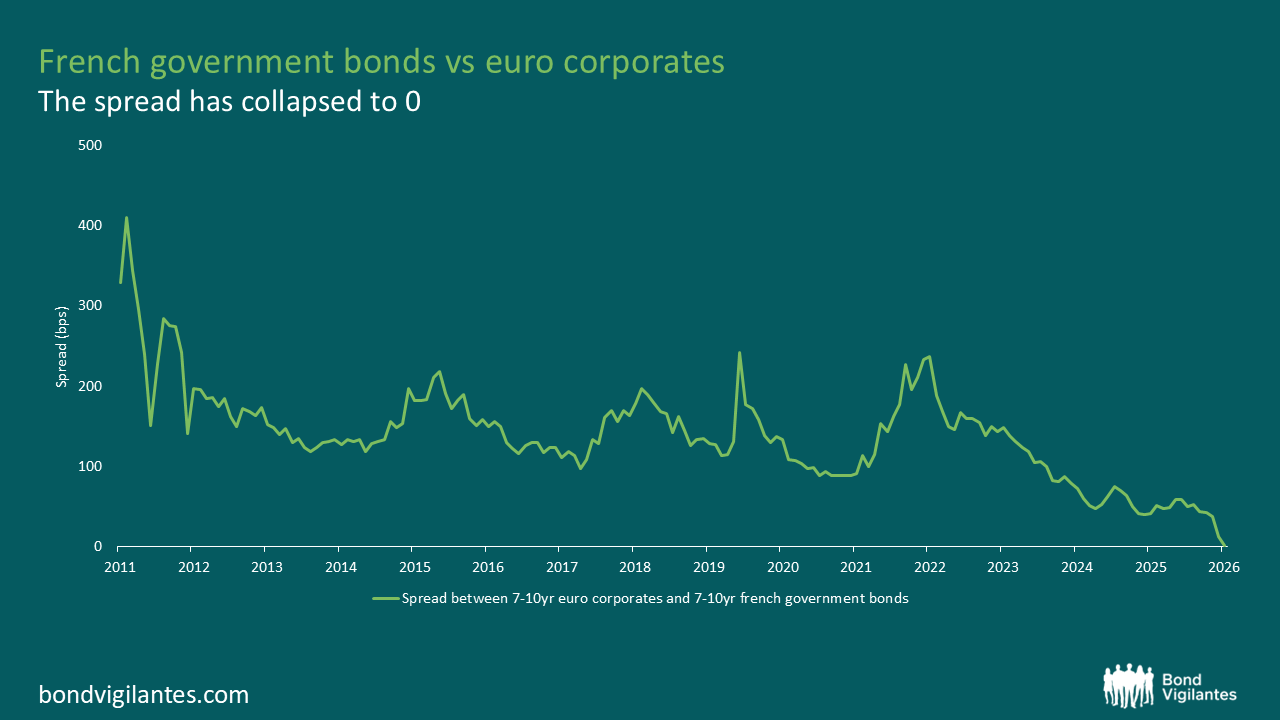
Source: M&G, Bloomberg. October 2026
This relationship, like Edith Piaf herself, is unconventional
The market convention is that bond asset classes sit in three basic categories:
- Government bonds: traditionally viewed as free of credit risk
- Investment grade: limited credit risk and should remain relatively stable in the face of an economic downturn
- High yield: more credit risk and potentially vulnerable
Within the government sector, the G7 is traditionally seen as the risk free benchmark. However, the credit ratings of the G7 since the turn of the century show a slow but fairly persistent deterioration in credit quality.
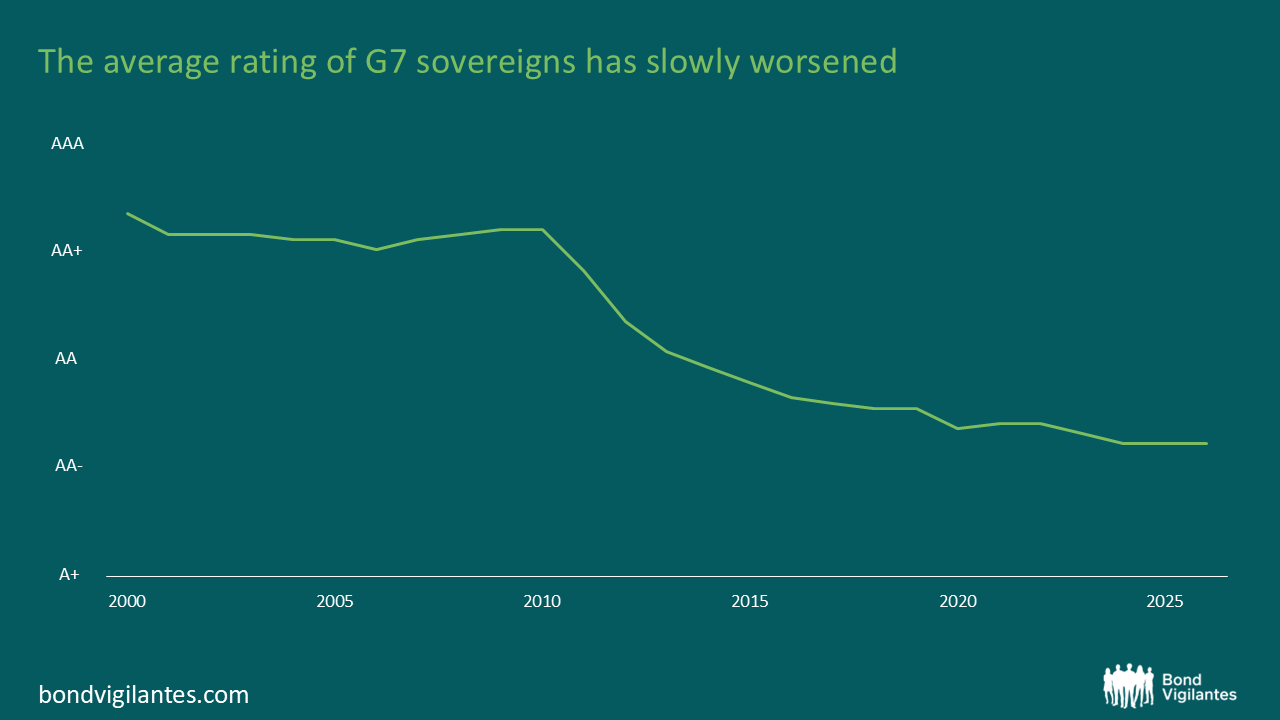
Source: M&G, Bloomberg. October 2026. Average rating of S&P, Moody’s and Fitch.
Why have government finances deteriorated?
The things that immediately come to mind are the financial crisis, recession, and the COVID response. However, governments have increasingly lacked the fiscal discipline to repair the damage once the storm has passed. This can be illustrated by French government debt in the chart below. Here you can see a spike through the Global Financial Crisis and during Covid-19 – a steady upward trend with step-ups for spending through economic shocks.
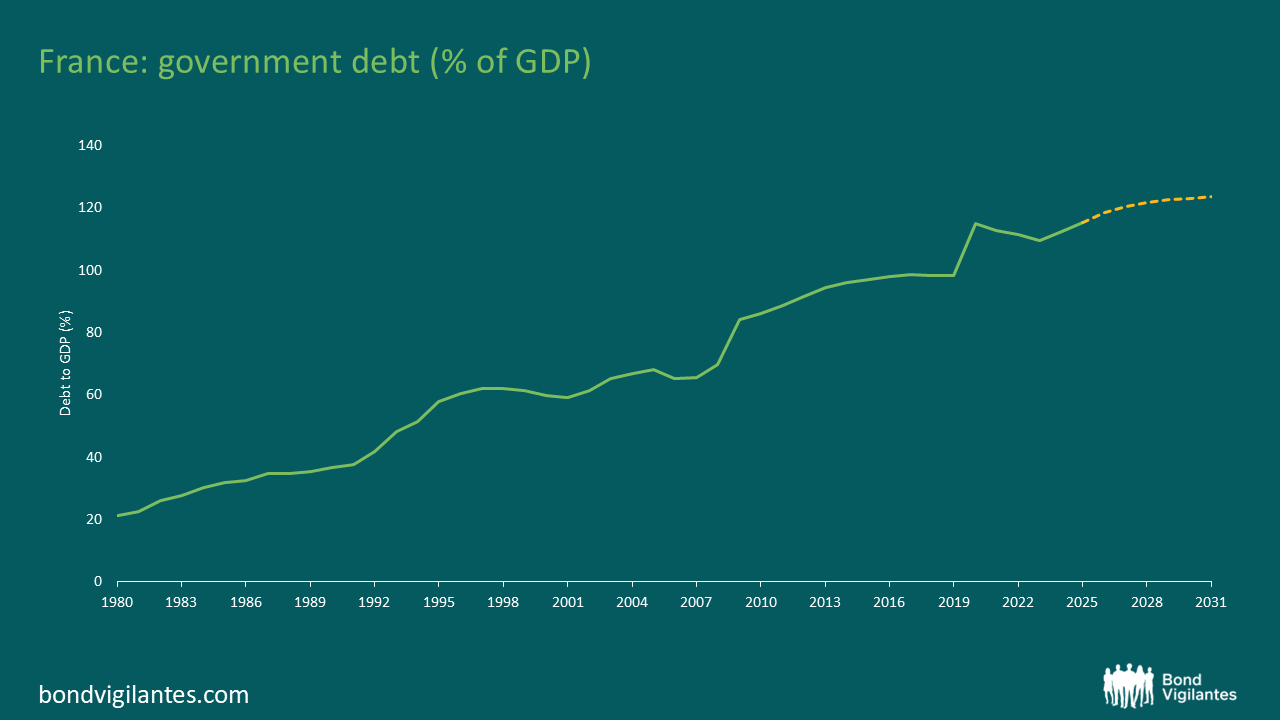
Source: IMF. General government gross debt (% of GDP). Years post 2025 are IMF forecasts. Data as at October 2026.
The chart covers more than forty years of rising debt. Reversing that trend would require a sustained period of fiscal discipline, something that may prove difficult to maintain through several election cycles. France may regret its fiscal position, but what is it prepared to do to solve the problem?
If a company managed its finances this way, shareholders would eventually provide the discipline required. With governments, management is effectively the politicians and the shareholders are the voters.
The questions remain:
1) Is French debt cheap relative to French corporates?
2) Are French corporates better quality and should trade through governments?
Will the French vote and say “Je ne regrette rien”?
The value of investments will fluctuate, which will cause prices to fall as well as rise and you may not get back the original amount you invested. Past performance is not a guide to future performance.