



Private credit: More Casper the Friendly Ghost than A Nightmare on Elm Street

With Halloween just around the corner, there is no shortage of scary stories. Private credit has faced its share of ominous headlines this year, but look beyond them and investors may find more treats than tricks.
It seems institutional investors certainly appear willing to look beyond those headlines. In fact, a recent BlackRock survey, reported by the Financial Times found that around three quarters of insurers expect to increase their allocations to private markets over the coming year. But, understanding that opportunity requires some nuance. ‘Private credit’ is not a single, homogeneous asset class. It is an umbrella term encompassing many different forms of lending, spanning a broad spectrum of risk, from investment-grade-style opportunities through to higher-yielding credit. Investing in private credit is not a case of throwing money into a cauldron, muttering an incantation and hoping for magic. Whether investing in public or private credit, the fundamentals of investment decision-making remain broadly similar: both draw on the same underwriting DNA to assess a borrower’s ability to repay its debt. The challenge is separating perception from the underlying reality.
Think back to when you were young and shapes seemed scary in the dark: that sinister character in a hat waiting in the hallway turned out to be nothing more than a coat rack once you switched on the light. As private credit investors, our role is to turn on that financial flashlight, using fundamental credit analysis to evaluate a company’s ability to service its debt and examining the seniority and security underpinning the loan to understand the protections available should things go wrong. By methodically assessing default risk, putting appropriate structural protections in place and considering relative value, we can strip away the mystique surrounding private credit, ensuring investors are appropriately rewarded for risks that can look far less scary under a bright light.
Take significant risk transfer (SRT) transactions. These transactions reference portfolios of performing, underwritten loans, allowing banks to transfer a portion of the associated credit risk and manage their regulatory capital requirements. By securitising this credit risk into distinct tranches, a transaction can be structured to cater to different risk appetites. The first-loss equity layer bears any losses arising from loan defaults in exchange for greater return potential, while the more senior mezzanine tranche benefits from the structural enhancement provided by the equity cushion beneath it and can exhibit investment-grade-style credit characteristics. Look beyond the complexity of the structure, and the underlying risks can appear much less ominous.
Or what about direct lending? The concept itself is relatively straightforward: lending directly to a company rather than through the public bond market, with the lender negotiating the economics, structure and protections of the loan. Much of the recent scrutiny has focused on the US, where, admittedly, some areas of risk appetite have looked rather more R-rated than PG. But direct lending is not one uniform market. European direct lending has historically experienced lower default rates, alongside stricter underwriting, stronger maintenance covenants, lower leverage and higher equity cushions. The vast majority of European direct-lending borrowers are mature, cash-generative mid-market and upper-mid-market companies, with more than half represented by highly resilient, defensive industries.
And then we have infrastructure debt. These transactions finance the tangible assets that keep modern economies moving, from renewable energy grids and regulated utilities to airports, shipping ports and digital connectivity networks. Their essential nature can support predictable, often inflation-linked cash flows underpinned by long-term government or corporate contracts. If you came looking for thrills and chills, you might be disappointed.
Ultimately, whether evaluating a complex SRT structure, a decidedly unscary piece of infrastructure debt or a direct loan to a mid-market company, the lesson for fixed income investors remains the same, one familiar from every good ghost story: things often look far scarier in the dark. If Casper taught us anything, it is that not every ghost is something to fear. The same goes for private credit: not every loan should give investors the chills.Some risks warrant caution; others can be understood, structured and appropriately priced.Turn on the light, look at the fundamentals and separate the real risks from the imagined ones.
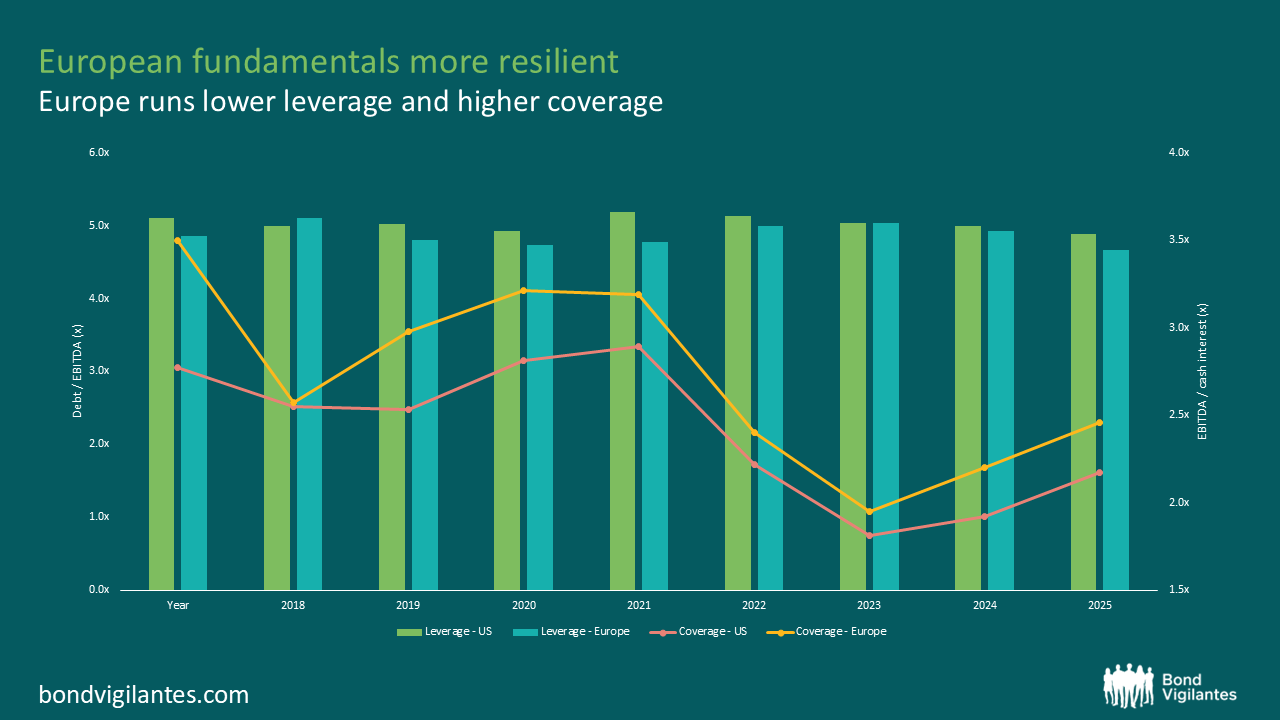
Source: Kroll Stepstone, as of Q1 2026
The value of investments will fluctuate, which will cause prices to fall as well as rise and you may not get back the original amount you invested. Past performance is not a guide to future performance.